
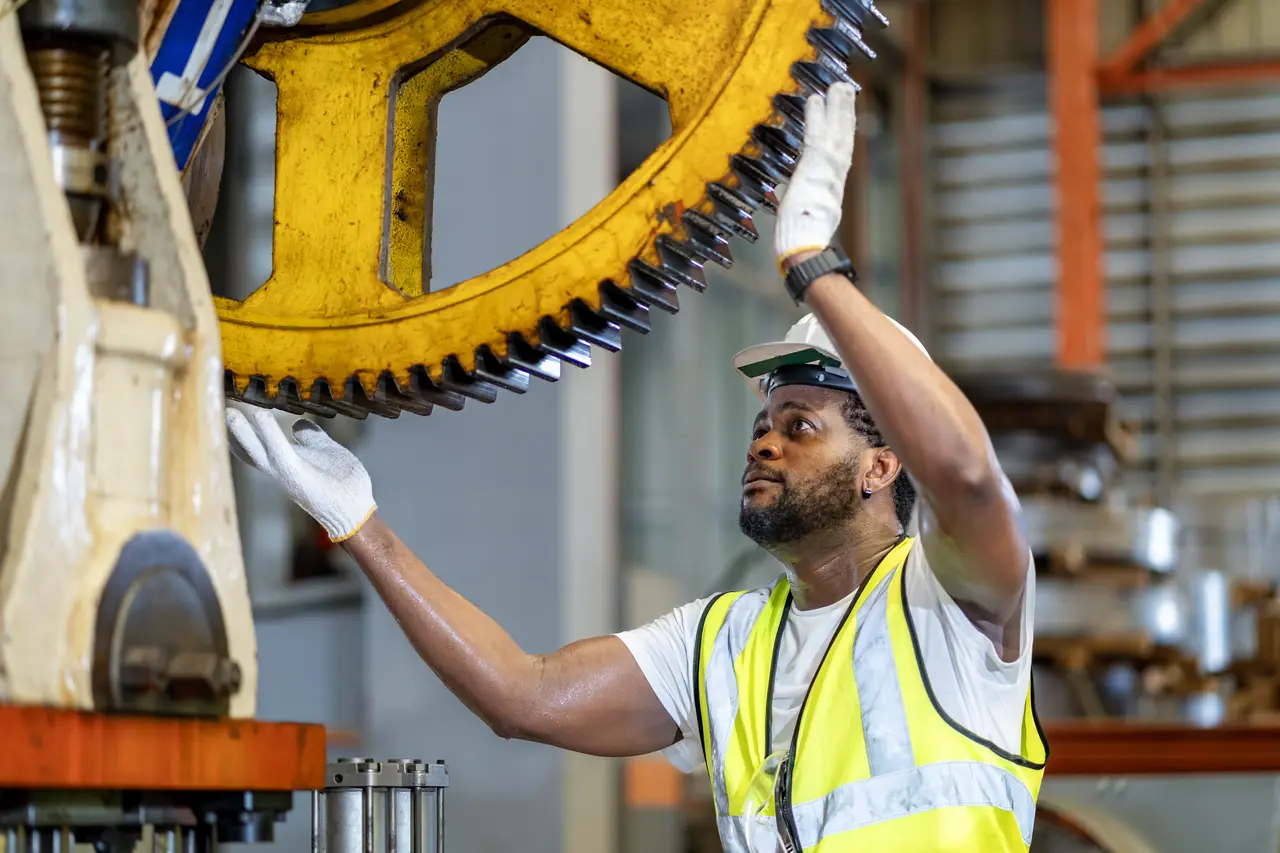
A construction machine can be fully operational one day and non-operational the following day due to a faulty or worn-out part. The problematic component can be a hydraulic pump, a seal, a bucket tooth, or another detail that requires replacement during equipment maintenance.
The challenge is not always in finding out which component needs to be replaced. More often, the difficulty is in locating a suitable replacement, acquiring it in time, and ensuring its compatibility with the machinery. In South Africa, spares sourcing is especially relevant for organizations that operate on a tight schedule, as delays due to part availability issues can impact multiple machines at once. Therefore, when choosing a construction equipment parts supplier in South Africa, it is necessary to consider not only the cost but also parts compatibility, sourcing and delivery options, and the supplier’s ability to address the client’s requirements.
Mantra Enterprise LLC provides a wide range of heavy construction equipment parts and other spare parts for earthmoving, mining, and industrial machinery. This guide explains construction equipment spare-parts sourcing, including how to compare OEM and aftermarket components, evaluate a supplier’s reliability, and estimate the total cost of machinery parts in South Africa.
What Construction Equipment Spare Parts Do You Need?
The list of required construction equipment spare parts is determined by the machinery type, its operating environment, and the maintenance scope. While some components are replaced during scheduled service, others are subject to regular wear and tear or require repair after an incident. Having an overview of the most common part failures for different equipment types can help identify components that need periodic replacement.
Excavators
Excavators involve different types of components depending on the terrain and working conditions. Hydraulic systems, engines and their accessories, undercarriage components, bucket parts, bearings, hoses, and coolers are among the most common excavator spares. In particular, hydraulic pumps, seals, and related equipment are subject to regular maintenance, whereas excavator tracks and associated parts, such as rollers and sprockets, are replaced once they become excessively worn. The required excavator spares also depend on the working conditions, such as whether the machine is used on a quarry or a construction site.
Wheel Loaders
Wheel loaders are used to move various materials, which puts stress on their buckets, tyres, and hydraulics. The most common wheel loader spare parts include bucket teeth, hydraulic pumps and cylinders, engines and their accessories, transmissions and axles, bearings, and cooling systems. Apart from general wear and tear, wheel loaders undergo maintenance when their tyres are replaced or their buckets suffer from impact damage. When selecting a replacement, it is important to note that the size and other characteristics of the bucket determine its load-bearing capacity. Therefore, a component that is incompatible with the mounting arrangement will result in inadequate performance.
Bulldozers
Bulldozers are used for pushing materials, leveling the ground, and other tasks, which makes the durability of their parts critical. The most common bulldozer spares include tracks, rollers, and sprockets, with track shoes being the most subject to wear. Other parts, such as blade cutting edges and end bits, hydraulic systems, engines and their accessories, and seals, also require maintenance. Since bulldozer undercarriage components involve multiple interconnected details, inspections of each component are necessary when one of them exhibits signs of damage.
Motor Graders
Motor graders are used to grade roads and construct various surfaces and structures. Their moldboards, steering systems, hydraulics, and other components are subject to regular wear and tear. Common construction machinery spare parts for motor graders include cutting edges and end bits, hydraulic pumps and cylinders, engines and their accessories, transmissions and axles, bearings, and electrical components. When replacing motor grader parts, it is important to ensure that the size and other dimensions of the component are compatible with the mounting arrangement. It is also important to remember that the moldboards of motor graders are used to move loose materials, which means that impact damage is a common occurrence.
What Should You Check Before Buying Replacement Construction Equipment Parts?
Having identified the required replacement construction equipment parts, the next step is to confirm their specifications. Not all components that appear similar can be used interchangeably, and the fit of a particular detail must be confirmed before purchasing.
The following recommendations can facilitate the selection of a suitable replacement for construction machinery.
Confirm the Part Number
The part number is one of the most critical pieces of information when searching for a replacement. Ideally, the prospective buyer should provide the supplier with the exact part number, as it describes the detail’s specifications and helps identify a suitable substitute. However, it is important to remember that a specific part number may no longer be in production, which means that the component might not be available. If the original part number is unavailable, the buyer should provide the supplier with additional information about the equipment and the spare part.
Check the Machine’s Brand and Model
The brand and model of the machine provide the supplier with background information about the required spare part. Ideally, the buyer should provide the supplier with the complete serial number of the equipment, as it can help identify the exact replacement. However, the serial number is sometimes unavailable, and the buyer can only indicate the brand and model of the machinery. In addition, the buyer should specify the details of the component, such as its size and mounting arrangement, if they believe that the part number is insufficient.
Discuss the Working Conditions
The working conditions also impact spare parts selection, as the stress factors vary depending on the equipment type. For instance, the same loader can be used in different environments, ranging from working with loose soil to handling gravel and other materials. As a result, the components that are subject to wear and tear will be different, and so will be the applicable maintenance schedule. When discussing the part requirements with a supplier, the buyer should identify the conditions under which the equipment is used and any particular stresses that the machinery undergoes. This information can help the supplier select the most appropriate replacement.
Consider the Purchase Cost
The purchase cost of the spare part is another consideration, although it should be evaluated in combination with other details. In particular, the buyer should pay attention to the balance between the cost and the scope of work, as well as the anticipated downtime costs. The price of a replacement is not the only factor, as the total cost also includes the installation and maintenance expenses. An inexpensive component that requires frequent replacement might be more expensive than a high-quality part with an extended service life.
When comparing the cost of different spare parts, it is also important to consider their operating hours and maintenance schedule. If the operating time of the two components is similar, they can be compared on a one-to-one basis. If the maintenance schedule differs, the buyer should evaluate the value of the spare part in terms of its service life. Ideally, the selection of a spare part should be based on a combination of these factors, taking into account the value of each.
How Do You Verify Equipment Models, Part Numbers, and Compatibility?
Compatibility is a crucial consideration for the selection of spare parts, which is especially important when a buyer purchases components from an overseas supplier. Even if the model and serial number of a machine appear to match, the dimensions and other specifications of the spare part may differ, which means the potential buyer must verify the details before purchasing.
In particular, the following steps can facilitate the verification of equipment models, part numbers, and compatibility:
Check Equipment Details
When communicating with a supplier, the buyer should provide complete information about the machinery, including the brand, model, serial number, and other distinguishing features.
Match Part Numbers
The buyer should also provide the supplier with the part number of the spare part, which should be provided in writing. Ideally, the part number should be specified in accordance with the manufacturer’s standards. However, the part number provided by the supplier should also be matched with the details of an existing part.
Compare Specifications
The buyer should also request the relevant specifications from the supplier, including the details of the spare part’s mounting arrangement. Particular attention should be paid to the size and other identifying features, which vary depending on the component type.
Evaluate Other Compatible Parts
Some parts are used together, which means that the compatibility of each detail should be taken into account when replacing any of them. For instance, the buyer should request information about other parts before replacing a component that is subjected to impact during operation. This way, the buyer can ensure that the spare part will function together with other details.
Request Written Confirmation
Prior to purchasing, the buyer should request written confirmation that the spare part is compatible with the equipment. The confirmation should also state the part details, such as the size and mounting arrangement, and other information provided by the supplier.
Verify Part Features with Photos
When the part number is unavailable, the buyer should request a photo of the spare part, which should be used together with the information provided by the supplier. Photos can also be used to identify minor differences in the mounting arrangement and other features that can affect the compatibility of a spare part.
The described steps can help avoid unnecessary complications related to the selection of a spare part. In particular, the buyer will not have to engage in the return or exchange of a part that is incompatible with the machinery or experience delays caused by the inability to determine compatibility.
OEM vs. Aftermarket Construction Equipment Parts: What Should Buyers Consider?
Many buyers face the dilemma of selecting between original equipment manufacturer (OEM) and aftermarket replacement parts. In particular, the choice between OEM and aftermarket components is affected by the part itself, the machinery involved, the operating conditions, and the buyer’s budget. The following factors should be taken into account when comparing OEM and aftermarket replacement parts for construction machinery:
OEM Parts
OEM parts originate from the equipment manufacturer. When selecting OEM parts, the buyer should pay special attention to the part number and price, as well as the date of manufacture and any applicable warranty. The selection of an OEM part is especially recommended when the original equipment specifications are critical, when there are specific requirements from the manufacturer, or when the part is covered by a warranty.
Aftermarket Parts
Aftermarket replacement parts originate from other manufacturers, and their characteristics, specifications, and cost vary significantly. Therefore, it is important to choose aftermarket parts with due care so that the selected spare component meets the intended purpose and performs reliably within the framework of the specified operating conditions. When selecting aftermarket replacement parts, the buyer should pay attention to the manufacturer’s characteristics, the availability of the necessary documentation, and the terms of the warranty.
How Do You Compare the Two?
| Factor | What to check |
| Compatibility | Does the part match the machine and required specifications? |
| Quality | What product documentation is available? |
| Price | What is the total purchase price, including additional costs? |
| Service life | Is there information on operating time? |
| Warranty | What are the warranty terms, exclusions, and conditions? |
| Availability | Is the part available within the required timeframe? |
The choice between OEM and aftermarket parts should be made on a case-by-case basis, as the differences between the two may be minimal in some cases and significant in others. In particular, the comparison should include all the characteristics that are relevant in the context of the intended use. The most reliable solution is to evaluate the value of each option based on a combination of the factors indicated above and select the most cost-effective one.
How Do You Evaluate a Construction Equipment Parts Supplier?
Identifying a reliable supplier is only the beginning of the search for a suitable spare part. If you are considering how to choose a reliable construction equipment parts supplier in South Africa, evaluate the company based on its product catalog, communication, delivery options, and other factors. The machinery owner should request the following information:
Product Categories
A construction equipment buyer typically has a wide range of requirements, from spare parts for various types of machinery to different auxiliary components. Therefore, it is important to locate a supplier that maintains an extensive product catalog that covers all of the buyer’s requirements. The wider the product catalog of a supplier, the more options are available when searching for a suitable spare part.
However, prior to selecting a supplier, the machinery owner should verify whether the target spare part is available. As such, the buyer should communicate with the supplier, provide the details of the required spare part, and request information about the availability of this component.
Product Information and Quality
The machinery owner should also pay attention to the level of product information provided by the supplier. In particular, the buyer should request the necessary data from the supplier in order to make an informed decision. This step is especially important when selecting a spare part with specific requirements – in this case, the buyer should request the necessary documentation to verify the characteristics of the target component.
Availability and Lead Time
The availability of a spare part is as important as its price and product characteristics. In particular, the machinery owner should ask the supplier whether the required part is in stock or whether it will be necessary to wait for the component to become available. If it is impossible to purchase the spare part immediately, the buyer should ask the supplier to specify the lead time, which will help in estimating the total cost of the component.
It is also important to clarify the delivery time, which depends on the location of the buyer and the transportation method selected by the supplier. In particular, the delivery time should be discussed with the supplier so that an accurate estimate of the total cost can be made. The machinery owner should also consider the possibility of delays caused by customs inspections and other factors, which is especially important when purchasing from an overseas supplier.
Shipping and Additional Expenses
When purchasing from an overseas supplier, the total cost of the spare part is not limited to its purchase price. On the contrary, there are several additional expenses, including shipping, insurance, import duties, taxes, and other costs. The buyer should request a detailed breakdown of the costs from the supplier. In particular, the pricing policy and terms of sale should be clarified so that it becomes possible to estimate the total cost of the spare part.
Communication and After-Sales Service
The level of communication and after-sales service is also a crucial consideration when selecting a supplier. In particular, the machinery owner should pay attention to how the supplier responds to requests and provides product information. This is especially important when one of the parties is unsure about the compatibility of the spare part. In particular, the buyer should request information on how the two parties can address a mismatch, file a claim, and handle other issues.
When purchasing a spare part, the machinery owner should consider all of the aforementioned factors and carefully evaluate the buyer’s requirements and the capabilities of the selected supplier. In particular, the machinery owner should request quotes that include all of the relevant information – product specifications, price, delivery time, shipping costs, and other expenses. The comparison of the quotes received will help the machinery owner identify the supplier that is the most suitable in terms of product specifications, pricing, and delivery options.
Keep Purchase Records
Keep the quotation, part number, supplier contact details, and shipment information for future reference. For companies managing a large fleet, maintaining a list of commonly replaced parts can also make repeat purchases easier and reduce time spent searching for specifications.
How Does Mantra Enterprise Support Construction Equipment Spare-Parts Sourcing?
Mantra Enterprise LLC offers spare parts for construction, earthmoving, and mining machinery, including ground engaging tools. To help identify a suitable component, buyers should share as much of the following information as possible when making an enquiry:
- Equipment details: Machine brand, model, and serial number.
- Part details: Part number and a description of the required component, if available.
- Photos and dimensions: Images or measurements that can help clarify the part’s specifications.
- Quantity: The number of units required.
- Working conditions: Any operating conditions or special requirements, such as a specific material grade.
- Delivery details: Destination and desired timeline, if applicable.
Providing these details can help clarify which component is required. Buyers should also confirm product availability, specifications, pricing, lead time, delivery arrangements, and any additional shipping or import expenses before placing an order.
Availability and delivery timelines can vary by destination and transportation method. Buyers sourcing parts for South Africa should confirm the estimated delivery schedule and total cost directly with the supplier before proceeding.