
A construction project rarely stops because the main machine suddenly disappears from the site. More often, it is something much smaller.
A filter. A set of bucket teeth. A roller. An engine component. A seal that should have been replaced two weeks earlier.
The machine is there. The operator is there. The work crew is ready. But one missing part can leave expensive equipment sitting idle.
For contractors managing several machines, this becomes even more difficult. A single project may have excavators, loaders, backhoe loaders, dozers, cranes and other equipment working at different locations. Keeping every possible part in stock is neither practical nor economical.
The smarter approach is to identify the parts that are most likely to affect operations and plan their availability in advance.
That is where a well-managed construction equipment spares in India strategy becomes important.
Why Spare Parts Stocking Matters for Construction Contractors
Construction equipment works in demanding conditions. Long operating hours, dust, uneven ground, heavy loads and changing site conditions all contribute to component wear.
The problem is not necessarily that a part will fail tomorrow. The problem is what happens when it does.
If a required replacement is not available, the contractor may have to wait for sourcing, confirmation, dispatch and delivery before the machine can return to work. On a multi site project, that delay can affect equipment allocation and the work schedule at another location as well.
For this reason, contractors should think about spare parts as part of equipment planning, not simply as something to purchase after a breakdown.
A practical inventory normally focuses on three things:
- Parts that wear out regularly
- Parts that are critical to machine operation
- Parts that may take longer to source when urgently required
This approach avoids the two extremes: keeping too little stock and tying up money in parts that may sit unused for years.
Which Construction Equipment Spare Parts Should Contractors Keep in Stock?
There is no universal stock list for every contractor. The right inventory depends on the equipment fleet, machine usage, site conditions and maintenance history.
Still, some categories deserve closer attention.
Filters for Construction Equipment
Filters are relatively small components, but they play an important role in protecting engines and other equipment systems.
Engine oil filters, fuel filters, air filters and hydraulic filters can become regular maintenance requirements depending on the machine and operating schedule.
For contractors running equipment in dusty environments, filter replacement deserves particular attention. A filter that is due for replacement should not become an emergency purchase simply because the next service is approaching.
Engine Components
Engine related components can be more difficult to source at short notice, particularly when the exact machine or engine model needs to be matched.
Contractors should review their maintenance history and identify engine parts that have shown repeated replacement requirements.
The objective isn’t to stock every engine component.
It is to understand which heavy equipment spare parts are genuinely critical to the fleet.
Ground Engaging Tools
Bucket teeth, adapters, cutting edges and other GET components experience direct contact with soil, rock and construction material.
Their wear rate can vary significantly depending on the application.
A machine working mostly in loose soil will not necessarily consume GET at the same rate as one working in abrasive rock or quarry material.
Keeping commonly used GET components available can therefore make sense for contractors whose excavators and loaders are constantly working on demanding sites.
Undercarriage Parts
Undercarriage components can become a significant maintenance consideration for tracked equipment.
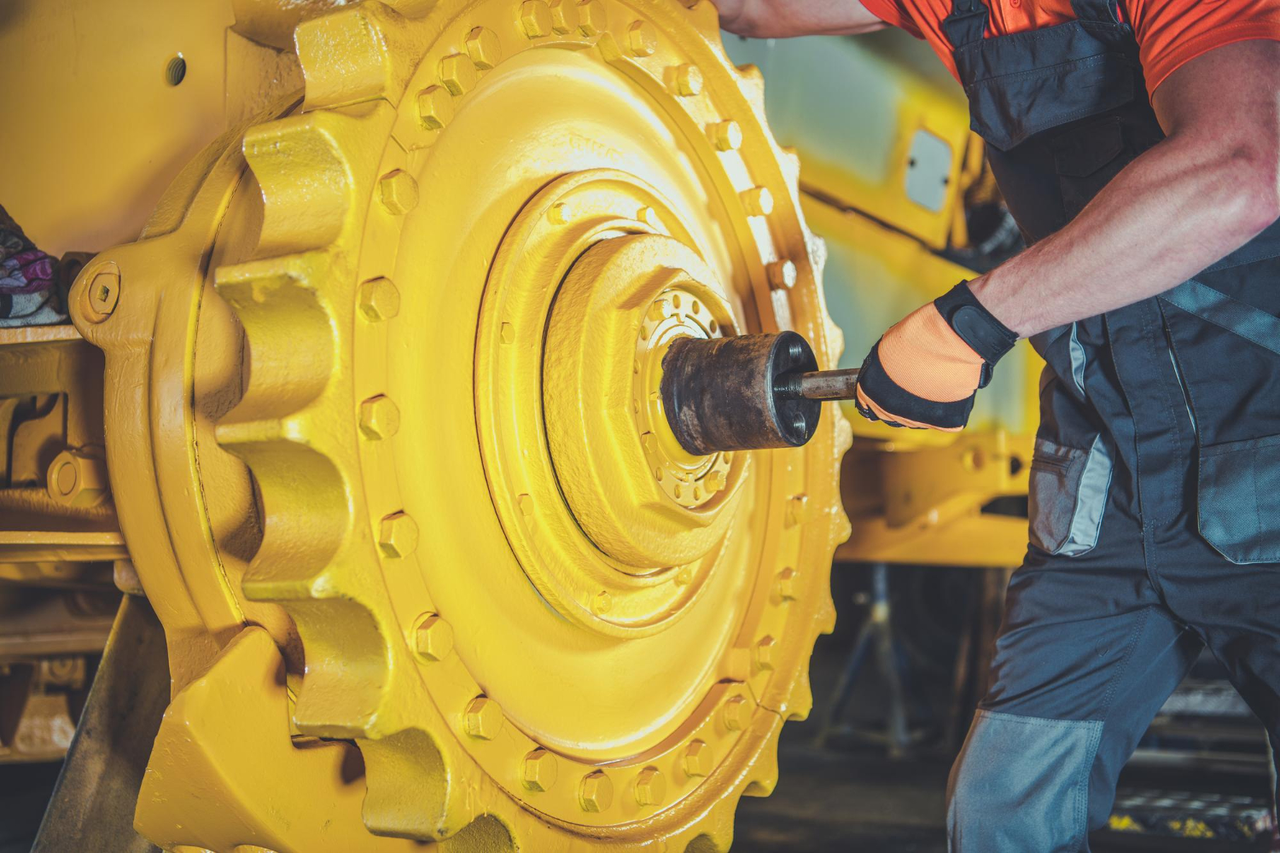
Track links, rollers, idlers, sprockets and related components should be monitored according to machine usage and wear condition.
The important point is not simply to buy undercarriage parts in advance. It is to monitor wear and understand when particular components are approaching replacement.
Hydraulic and Other Critical Components
Hydraulic components, seals, pumps and related parts can also become important depending on the equipment and application.
These should be classified based on actual fleet history rather than assumptions.
For example, if a contractor operates a particular excavator model across several projects and repeatedly replaces a specific component, that history is more useful for inventory planning than a generic spare parts catalogue.
Build Your Inventory Around Equipment Usage, Not Just Part Availability
One of the easiest mistakes is creating a spare parts list based only on what a supplier has available.
Your own equipment tells you much more.
Consider:
Which machines work the most hours?
A heavily used excavator may require a different stocking approach from a machine that is used only occasionally.
Which parts are replaced most frequently?
Maintenance records can reveal patterns that are easy to miss when procurement is handled only after a failure.
Which machines are critical to the project?
If one excavator is responsible for the majority of excavation work, its critical replacement parts deserve greater attention.
Where is the equipment working?
A machine working at a remote project site may require more advance planning than equipment located close to your main workshop or supplier network.
How quickly can the part realistically be sourced?
This is an important question. A commonly available filter and a specialised component should not be treated in exactly the same way.
Critical Stock vs Parts You Can Source When Needed
Not every spare part belongs in the warehouse.
A useful way to think about inventory is to divide parts into two groups.
Critical Stock
These are parts where waiting for procurement could seriously affect the machine or project.
Examples may include frequently used filters, selected GET components, common wear parts and other components identified through maintenance records.
On Demand Parts
These are components that are expensive, rarely replaced or normally available within an acceptable lead time.
Instead of holding them in large quantities, contractors can maintain reliable supplier relationships and a clear procurement process.
This is particularly useful for businesses operating several construction sites. A centralized approach can make it easier to understand what is already available, what is being used and what needs to be replenished.
Construction inventory systems also increasingly focus on tracking parts across equipment, work orders and multiple locations rather than treating each site as an isolated stockroom.
Managing Spare Parts Across Multiple Construction Sites
This is where the problem becomes a little more complicated.
Imagine a contractor operating three projects.
One site has an excavator that needs undercarriage work. Another has a loader consuming GET components faster than expected. A third site needs routine filters for scheduled maintenance.
If each site maintains its own disconnected inventory, the contractor may end up purchasing a part that is already sitting unused at another location.
A better system starts with a simple central record.
Track:
- Equipment make and model
- Part numbers
- Parts currently in stock
- Parts already ordered
- Parts consumed by each machine
- Reorder requirements
- Location of available stock
- Supplier and sourcing information
It doesn’t have to begin with complicated software. Even a well maintained inventory sheet can provide useful visibility.
The important thing is that the maintenance and procurement teams are working from the same information.
Why Part Identification Matters Before Ordering
One of the most expensive spare parts mistakes is ordering the right-looking part for the wrong machine.
A supplier may need the equipment make, model, serial number, engine information or existing part number to confirm compatibility.
Indian heavy equipment parts suppliers commonly organize their offerings around machine models, part numbers and categories such as filters, undercarriage, GET and engine components.
Before sending a purchase request, contractors should therefore collect as much accurate information as possible.
A simple checklist can include:
Machine: Make and model
Component: Exact part required
Part number: If available
Quantity: Required now and expected future requirement
Application: Type of work and operating conditions
Delivery location: Project or warehouse location
Required date: When the machine actually needs the part
That small amount of preparation can make communication with a construction equipment parts supplier much easier.
Why Better Spare Parts Planning Makes Construction Operations Easier
Good inventory management isn’t about filling a warehouse with expensive components.
It is about avoiding unnecessary surprises.
A contractor who knows which parts are critical, which components are wearing faster, and which items need longer sourcing time can make procurement decisions earlier.
That can make a noticeable difference when several machines are working across different project sites.
For companies looking for construction equipment spares in India, the goal should therefore be simple: maintain enough of the right parts to support the equipment that matters most, while having a dependable sourcing process for everything else.
Why Mantra Enterprise LLC for Construction Equipment Spare Parts?
Mantra Enterprise LLC supports businesses looking for heavy equipment and industrial spare parts across construction and related applications.
For contractors, the requirement is often not limited to one category. It can involve heavy equipment spare parts, engine components, filters, GET, undercarriage components, transmission parts, and other replacement requirements.
The practical approach is to understand the equipment requirement first and then identify the appropriate component.
If you’re reviewing your construction equipment spare parts requirements for upcoming projects, you can check Mantra Enterprise LLC’s available solutions and discuss the parts you actually need.
Frequently Asked Questions
What construction equipment spare parts should contractors keep in stock?
The priority normally depends on equipment usage and maintenance history. Frequently used filters, GET components, selected wear parts and other critical replacement components are common candidates for planned stock.
How much construction equipment spare parts inventory should a contractor maintain?
There is no single number that works for every contractor. Inventory should reflect machine criticality, replacement frequency, project location, supplier lead time and the cost of equipment being idle.
Should contractors stock filters and GET parts?
For frequently used machines, it can make sense to maintain commonly required filters and GET components because these can be regular wear or maintenance items. The exact stock level should be based on actual consumption.
How can contractors manage spare parts across multiple sites?
A central inventory record can help track available stock, part numbers, machine requirements, orders and consumption across locations. This reduces the chance of buying a part that is already available elsewhere.
What information should I provide when ordering heavy equipment spare parts?
At minimum, provide the equipment make and model, required component, part number if available, quantity and application. Serial or engine information can also help confirm compatibility.