
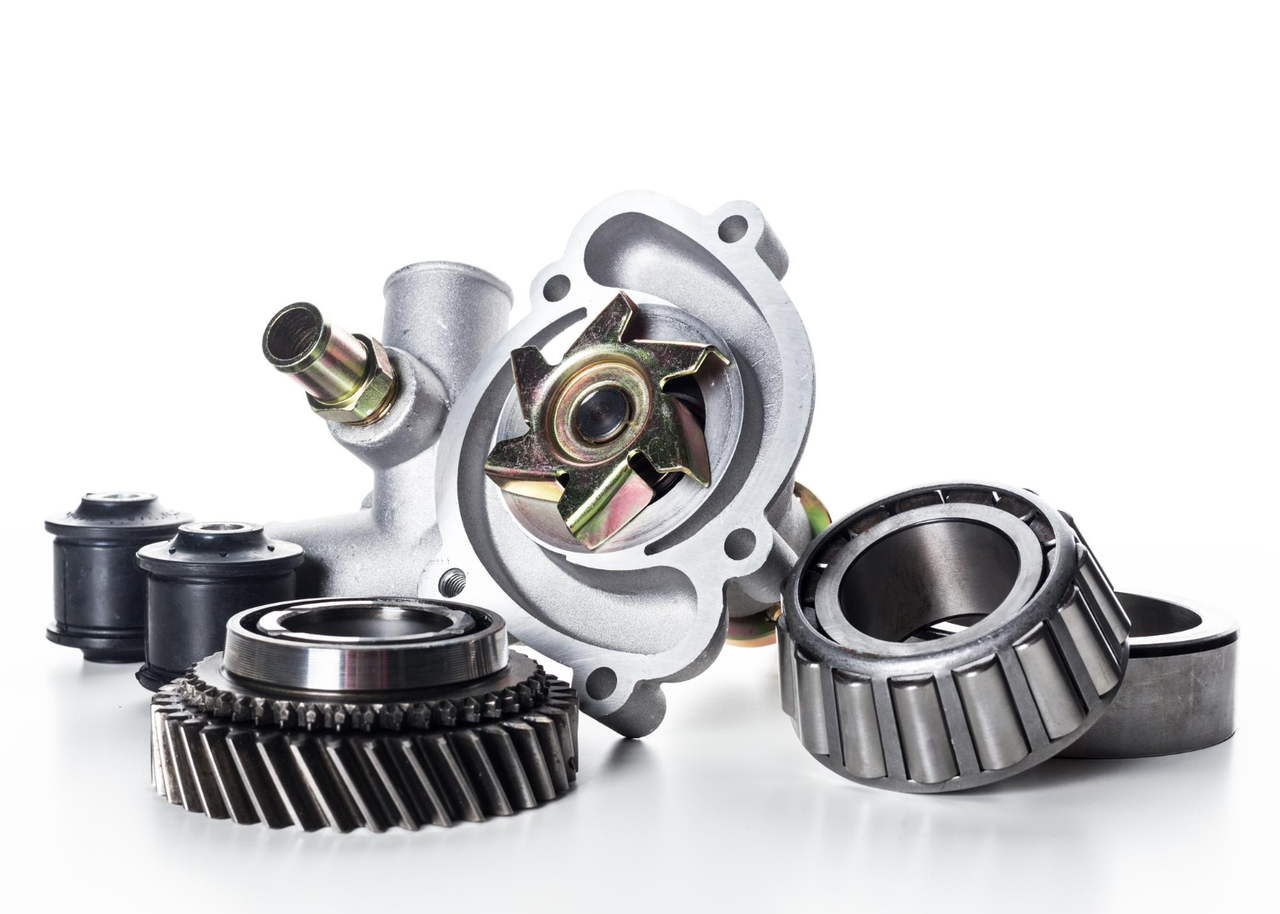
A heavy equipment engine usually gives you some warning before a serious problem develops. It may take longer to start, consume more fuel than usual, lose power during demanding work, or simply behave differently from what the operator is used to.
The difficult part often comes after the problem is identified.
The maintenance team knows a component needs to be replaced, but finding the correct replacement isn’t always straightforward. The same type of machine can have different engine configurations, production variants, or component specifications. A part that looks almost identical to the original may still not be the right choice.
For construction contractors, mining companies, equipment fleet owners, and industrial operators, this is why choosing engine spare parts in India needs more thought than simply comparing two prices.
The right part needs to match the engine, suit the application, meet the required specifications, and be available when the equipment actually needs it.
Why Choosing the Right Engine Spare Parts Matters
Heavy equipment engines operate under demanding conditions. Excavators, loaders, bulldozers, dumpers and other machines may work for long hours while carrying heavy loads or operating in environments filled with dust, mud, heat and vibration.
Under these conditions, engine components experience continuous stress. A replacement component that is poorly matched to the engine can create problems that are more expensive than the original part itself.
For example, a component may physically fit but not have the required specifications. Another part may be suitable for one engine variant but not another. In some cases, an incorrect replacement can lead to additional wear, repeated maintenance or another equipment shutdown.
This is why experienced suppliers usually ask for equipment details before confirming an order. Indian suppliers serving the construction and mining sector commonly request information such as the machinery make, model, part number and required quantity before sourcing a component.
The basic principle is simple: identify the engine and the component correctly before you start comparing suppliers.
What Information Should You Have Before Ordering Engine Spare Parts?
The first step is to gather the information already available within your maintenance records or equipment documentation.
Start with the machine make and model. This establishes which equipment the component belongs to, but it may not always be enough on its own.
The engine model is equally important. Heavy equipment manufacturers can use different engine configurations across models, production periods and applications. Knowing the exact engine model can significantly narrow down the possible replacement components.
The original part number is even more useful when it is available. If the number is printed on the old component, listed in the equipment documentation, or available through the existing parts catalogue, include it in the supplier enquiry.
The machine serial number can also help, particularly when there have been changes to a machine model during its production lifecycle.
Finally, mention the quantity required and the application. A contractor looking for one urgent replacement component has a different requirement from a mining company planning a maintenance order for several machines.
The more complete the information, the less time is spent going back and forth trying to identify the requirement.
Common Heavy Equipment Engine Parts That May Require Replacement
Engine replacement requirements vary considerably between machines and operating conditions. There is no single list that applies equally to every excavator, loader, dumper or mining machine.
However, maintenance requirements can involve components such as pistons, piston rings, cylinder liners, bearings, gaskets, seals, valves, fuel injectors, pumps and other engine components.
Filters are also an important part of routine engine maintenance, although they are generally treated differently from major internal engine components because replacement intervals are often linked to scheduled servicing.
The important point for fleet managers is not to stock every possible component.
Instead, maintenance history should be used to identify which heavy equipment engine parts are replaced regularly, which components are difficult to source quickly, and which parts could cause significant downtime if they are unavailable.
This creates a much more practical spare parts strategy.
OEM vs Aftermarket Engine Parts: What Should Indian Buyers Consider?
One of the most common decisions during spare parts procurement is whether to purchase an OEM component or a suitable aftermarket replacement.
There is no universal answer.
OEM parts are designed around the equipment manufacturer’s specifications and may be preferred when exact manufacturer support, warranty requirements or specific application considerations are important.
Quality aftermarket parts can provide another option where availability, cost, or sourcing flexibility matters. Several Indian suppliers currently offer both genuine/OEM and aftermarket components for construction and mining equipment.
The mistake is to make the decision based only on the words “OEM” or “aftermarket.”
The actual component matters.
Buyers should consider compatibility, manufacturer or source, specifications, operating application, expected service life, availability and supplier support.
A cheaper part that needs to be replaced again after a short period may not actually be cheaper. At the same time, a more expensive component is not automatically the better choice simply because it carries a higher price.
For fleet managers, the better question is:
Which component is appropriate for this machine and application, and what is the overall cost of using it?
That is a much more useful procurement question.
How to Check Engine Part Compatibility Before Ordering
Compatibility should be confirmed before the purchase order is placed, not after the part arrives.
Start by matching the equipment make and model with the engine model. Then check the original part number whenever possible.
If the original part number is unavailable, provide as much supporting information as possible. A supplier may be able to work with the machine model, engine details, component name, photographs and other identifying information.
Dimensions and technical specifications can also matter for certain engine components. Simply finding a component with the same general appearance is not enough.
This is particularly important when purchasing replacement engine parts for older equipment or machinery that has undergone modifications over its operating life.
Current Indian heavy equipment suppliers increasingly use model and part number based identification to help customers locate compatible components. OEM Parts Connect, for example, provides parts searches based on equipment categories and part numbers and lists compatibility across several major heavy equipment brands.
For buyers, this reinforces an important habit: never rely on the machine name alone when identifying a critical engine component.
What Happens When the Wrong Engine Part Is Ordered?
The obvious problem is that the component may not fit.
But the consequences can go beyond a return or replacement.
A wrong part can delay the maintenance job. The equipment may remain unavailable while another component is sourced. Labour may already have been scheduled, the machine may have been transported to a workshop, and operators may be waiting for it to return to work.
For a construction contractor, that can affect the progress of a project.
For a mining operation, the consequences can be even more significant when the machine forms part of a continuous production process.
This is why accurate parts identification is not simply a procurement detail. It is part of equipment uptime planning.
Research into industrial spare parts management has also highlighted a related problem: parts information is often fragmented across different descriptions, references and locations, which can make an existing component difficult to identify or find even when it is technically available.
A clear identification process helps reduce that problem.
What Should You Look for in an Engine Spare Parts Supplier in India?
Finding an engine parts supplier is not particularly difficult.
Finding one that can understand a complicated equipment requirement is more important.
A good supplier should be able to work with the information provided by the maintenance or procurement team and help establish what component is actually required.
Multi brand experience can be useful because Indian construction and mining fleets often contain equipment from different manufacturers. Suppliers in this market commonly position themselves around brands such as CAT, Komatsu, Volvo, BEML, SANY, Tata Hitachi, JCB and others.
Availability is another important factor. If the component is not immediately available, the supplier should be able to communicate whether it needs to be sourced and provide a realistic expectation for delivery.
Quality information matters as well. Buyers should be able to understand what they are purchasing rather than receiving only a price and a part name.
And then there is communication.
It sounds basic, but when equipment is waiting for a component, clear communication about identification, availability, quantity and delivery can make the procurement process much easier.
What Information Should You Send When Requesting an Engine Part?
A message such as “Need engine spare parts for excavator” doesn’t give a supplier much to work with.
A better enquiry includes the machine make and model, engine make and model, serial number, original part number if available, component name, required quantity and application.
If possible, photographs of the existing component can also help.
The delivery location and required date are useful too. There is a big difference between a part required for scheduled maintenance next month and one needed immediately because a machine is already standing idle.
Providing this information at the beginning can reduce unnecessary communication and help the supplier understand the actual requirement.
Indian parts suppliers commonly request details such as machinery make or model, part name and quantity when customers ask for specific components.
For larger fleet operators, it is worth making this information part of the standard procurement process.
Engine Spare Parts for Construction Equipment
Construction equipment is often moved between projects, which means the same machine may work under very different conditions during its service life.
An excavator used for general earthmoving may experience a different maintenance pattern from one working continuously on a road construction project. Similarly, a loader working in a quarry may have different component demands from one used for material handling.
This is why contractors should look at their own maintenance history when planning heavy equipment spare parts.
If a particular engine component has been replaced several times across the same equipment group, that information is valuable. It can help maintenance teams anticipate future requirements instead of waiting for the next failure.
For larger contractors, keeping basic records of part numbers, machine models, previous replacements and supplier information can make future procurement considerably easier.
Engine Spare Parts for Mining Equipment
Mining equipment can place even greater demands on engines because machines may operate for extended periods under heavy loads and difficult environmental conditions.
In such operations, an engine component that becomes unavailable at the wrong time can create a much bigger operational problem.
Mining companies can therefore benefit from identifying critical engine components and understanding their normal replacement cycles.
This does not necessarily mean maintaining a warehouse full of every possible engine component.
It means knowing which parts are critical, which are difficult to source quickly, and which can be procured as part of planned maintenance.
The same principle applies to construction fleets.
Good parts planning is less about buying more and more components and more about knowing what you are likely to need and when.
A Practical Engine Spare Parts Buying Checklist
Before placing an order, take a few minutes to check the basic information.
Confirm the equipment make and model. Confirm the engine model. Check the original part number if it is available. Verify the machine serial number where relevant. Make sure the required quantity is clear and explain the application if it affects the component choice.
Then ask the supplier whether the part has been matched against the information provided.
If you are considering an aftermarket component, ask about its specifications, manufacturer, compatibility and expected application.
Finally, confirm availability and delivery expectations before finalizing the order.
It may take a few extra minutes at the beginning, but it can save considerably more time later if the alternative is receiving the wrong component.
Why Better Parts Identification Makes Procurement Easier
There is a simple problem behind many difficult spare parts enquiries.
The required component may exist, but the information needed to identify it isn’t complete.
This happens frequently when older equipment is involved, when documentation is missing, or when different teams use different names for the same component.
One person may refer to a component by its common name. Another may use an internal stock code. The supplier may need the manufacturer’s part number.
When those references don’t connect, even a straightforward procurement requirement can become unnecessarily complicated.
This is why accurate equipment records are becoming increasingly useful in industrial spare parts management. Research into spare parts information retrieval has highlighted how inconsistent descriptions and fragmented inventory information can make otherwise available parts difficult to identify.
For construction and mining businesses, the practical solution is simple: maintain accurate machine information and provide it whenever a replacement part is requested.
Why Mantra Enterprise LLC for Heavy Equipment Engine Parts?
Mantra Enterprise LLC supports businesses looking for heavy equipment spare parts and components for construction, mining and industrial applications.
An engine parts requirement may sometimes be a single replacement component. In other cases, it can be part of a wider maintenance requirement involving filters, transmission parts, GET, undercarriage components or other heavy equipment spare parts.
The starting point should always be understanding the machine and the actual component requirement.
For businesses sourcing engine spare parts in India, having the right equipment information ready makes the process much easier. Machine model, engine model, part number, quantity and application can turn a vague enquiry into a clear sourcing requirement.
And that is usually where a good parts procurement process begins.
Identify the machine. Confirm the engine. Verify the component. Then compare the right sourcing options.
Frequently Asked Questions
What information is needed to order engine spare parts for heavy equipment?
The most useful information includes the machine make and model, engine model, serial number, original part number, component name and required quantity. Photographs can also be useful when the original part number is not available.
Are aftermarket engine parts suitable for heavy equipment?
Quality aftermarket components can be suitable for certain heavy equipment applications, but buyers should verify compatibility, specifications, manufacturer quality and intended application before purchasing. The decision should be based on the specific component and machine requirement.
How can I identify the correct engine spare part?
Start with the original part number if available. Then confirm the equipment model, engine model and serial number. If the number is unavailable, provide the supplier with clear machine information and photographs of the existing component.
Should construction companies keep engine spare parts in stock?
It depends on the fleet and maintenance history. Frequently replaced or operationally critical components may justify planned inventory, while expensive and rarely required parts may be better sourced when needed.
What is the difference between engine components and engine spare parts?
Engine components are the individual parts that make up an engine system. Engine spare parts generally refers to those components when they are supplied as replacements for maintenance or repair.
How can buyers avoid ordering the wrong heavy equipment engine part?
The safest approach is to confirm the equipment model, engine model, part number, specifications and application before ordering. When there is uncertainty, provide the available identification details to the supplier and request compatibility confirmation.
What should I ask an engine spare parts supplier before ordering?
Ask about compatibility, part identification, manufacturer or source, availability, expected delivery time, quantity, quality information and applicable support or warranty terms. Clear communication before the purchase can prevent problems after delivery.